

Campus Address
Jawaharlal Nehru University
Jawaharlal Nehru University, Delhi, Delhi
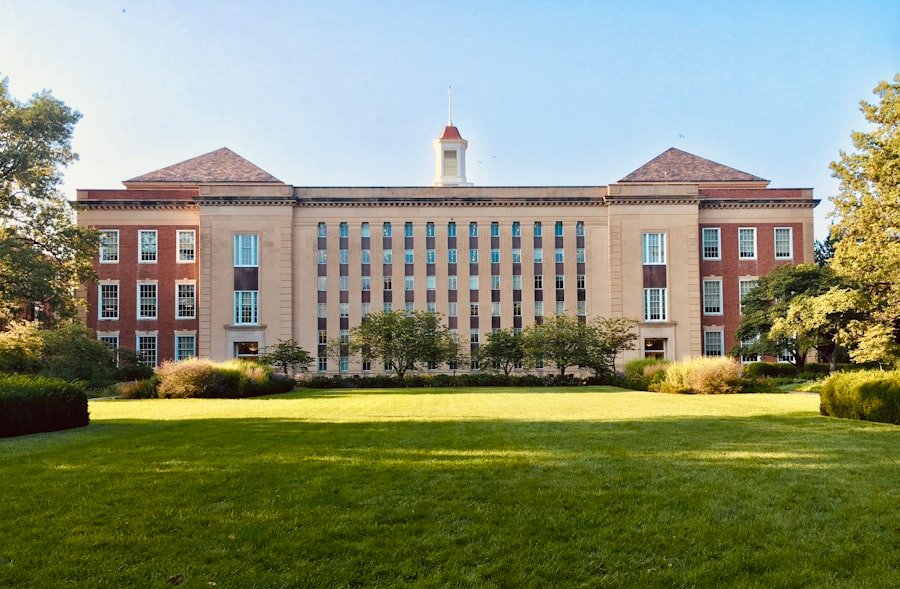
Established in 1969, Jawaharlal Nehru University is a central university located in Delhi, Delhi, and is considered by students who want recognised higher education with practical academic exposure. The institution offers around 100 programs across professional, technical, management and interdisciplinary areas. With UGC Recognised|AICTE Approved and an academic profile linked with Central University, it provides a structured environment for students comparing courses, fees, admission process, placements and campus facilities in Delhi. Its learning ecosystem focuses on classroom knowledge, applied skills, internships and career readiness.
Rather than judging Jawaharlal Nehru University only by a single ranking, fee figure or placement headline, students should compare the specific programme, admission route, academic environment, campus resources, location, total cost and career outcomes that apply to them. The profile below is designed as a practical shortlisting guide and should be read together with the latest official programme and admission information.
Jawaharlal Nehru University has developed its academic identity around organised teaching, employability-focused programmes and a student-centred learning environment. Its academic model supports structured learning, recognised degree pathways and course options aligned with student career goals. The curriculum is generally designed to combine core subject knowledge with electives, practical sessions, projects, presentations and continuous assessment. This helps students move beyond textbook learning and understand how concepts are used in real academic, technical and professional situations. The institution is NAAC A++|NIRF University, and this adds value for students who are checking recognition, academic credibility and long-term degree acceptance. Its academic profile covers a mix of undergraduate, postgraduate and specialised programmes, giving learners the option to choose courses according to interest, marks, budget and career direction.
A useful way to evaluate the academic experience is to look beyond the course title. Students should examine the curriculum structure, electives, practical components, laboratories or studios where relevant, project requirements, internship expectations, faculty expertise and assessment pattern for the exact programme they plan to join. For professional courses, programme-level approval or accreditation can be as important as the overall university profile.
Jawaharlal Nehru University currently has approximately 100 programmes listed in this database. A large programme count can provide breadth, but students should not choose a college simply because it offers many courses. The better question is whether the specific department and specialisation match the student's academic interests and career direction.
Before shortlisting a course, compare its duration, curriculum, eligibility, intake, faculty, practical requirements, internship structure, professional recognition and progression options. Students should also check whether a specialisation is offered from the first year or selected later, and whether the course is delivered at the same campus shown in this profile.
Admission to Jawaharlal Nehru University is usually based on course-specific eligibility, academic merit and accepted entrance exams. For undergraduate programmes, students are generally expected to meet the required Class 12 eligibility with relevant subjects where applicable. For postgraduate courses, applicants normally need a recognised bachelor’s degree in the required discipline. The university may consider marks in qualifying examinations, entrance test performance, personal interview, counselling rounds or department-level selection rules depending on the programme. The accepted entrance exams may include JEE Main, along with any university-level or course-specific admission process announced for the current session. Students should complete the online or offline application form, upload or submit required documents, pay the application fee and follow counselling instructions carefully. Document verification commonly includes marksheets, identity proof, entrance scorecard, photographs, category certificate if applicable and transfer or migration documents.
Students should avoid assuming that one admission route applies to every department. Universities with a broad academic portfolio often use different selection methods for different programmes.
The indicative fee range currently recorded for Jawaharlal Nehru University is ₹10K to ₹2L / year. This should be treated as a broad comparison figure rather than the final payable amount for every programme. Tuition can vary substantially by course, specialisation, semester, category and academic structure.
A realistic college budget should consider:
Students should also review scholarship eligibility, continuation conditions, minimum academic-performance requirements, income/category rules and refund policies. A scholarship headline is not enough; the actual amount, renewal criteria and exclusions matter when planning the total cost of study.
Departments usually encourage project-based education, seminar participation, laboratory work, case discussions, field exposure and research-oriented assignments. Industry exposure is an important part of the student journey at Jawaharlal Nehru University. Students may receive opportunities for internships, live projects, industrial visits, guest lectures, workshops and interaction with professionals from relevant sectors. The campus environment also encourages innovation through technical events, entrepreneurship discussions, incubation-related activities and problem-solving projects wherever available. Faculty members generally include experienced professors, research-oriented teachers and visiting or industry-linked experts who guide students in academics as well as career planning.
Students interested in research should examine the facilities and opportunities available within their own department rather than relying only on university-wide claims. Useful indicators include faculty research areas, funded projects, laboratories, research centres, publications, conferences, student projects, dissertation options and opportunities to work across disciplines.
For students focused on employability, skill development can also come from project work, competitions, student societies, hackathons, case studies, field assignments, presentations and industry-linked activities. The value of these opportunities depends heavily on how actively a student participates.
Industry exposure should be evaluated separately from final placements. Depending on the programme, meaningful exposure may include internships, live projects, industrial visits, guest sessions, professional workshops, clinical practice, field training, legal exposure, studio work, research attachments or entrepreneurship programmes.
Students should ask practical questions: Are internships compulsory or optional? Who helps students find them? Are they paid or unpaid? Which organisations have hosted students from the same programme? Are live projects part of the curriculum? These details give a clearer picture of career preparation than a general collaboration statement.
The placement and career support system at Jawaharlal Nehru University focuses on preparing students for internships, campus recruitment and early career opportunities. The placement cell generally coordinates recruiter communication, training schedules, industry interaction, pre-placement talks and interview processes. Students may receive support for aptitude preparation, communication skills, group discussions, resume building, portfolio development, mock interviews and professional behaviour. This support is useful for students applying to companies, startups, research roles, internships or higher study pathways. Recruiter participation and placement outcomes can differ across courses, branches and student performance. As per the available data in the college profile, the highest package is listed as ₹25 LPA, the average package is listed as ₹5 LPA, and the placement rate is mentioned as 75%. These figures should be checked with the latest official placement report before making a final decision.
These figures should not be interpreted as a guaranteed outcome for every student. Package and placement statistics can differ significantly by school, course, graduating batch, job role and student profile. Before making a decision, compare the latest programme-specific average or median package, placement percentage, recruiter mix, internship conversion, role quality and number of participating students.
Students planning for higher studies, research, entrepreneurship, government examinations or professional qualifications may follow a different path, so campus placement statistics should be only one part of the decision.
The recorded campus area is 1019 Acres. Campus size alone does not determine academic quality; what matters is whether students have reliable access to the facilities required by their programme.
The existing institutional profile indicates learning support through facilities such as libraries, digital resources, laboratories, computing facilities, Wi-Fi and technology-enabled classrooms, with specialised infrastructure varying by discipline. Students in laboratory-, studio-, clinical- or workshop-intensive courses should specifically verify the facilities attached to their department.
Facilities can change or differ between campuses, so students should use the official campus pages, virtual tours or an in-person visit to confirm what is actually available for their programme.
Accommodation can materially affect the total cost and day-to-day experience of college. Students who need housing should verify whether Jawaharlal Nehru University offers on-campus hostels for their category and programme, how rooms are allotted, what the hostel and mess charges include, curfew or access rules, security arrangements and whether accommodation is guaranteed or subject to availability.
If on-campus accommodation is unavailable or not preferred, compare nearby PGs, rented rooms and shared flats on distance, safety, public transport, food access, medical facilities and monthly living cost. Do not pay a private accommodation deposit only on the basis of photographs or an online listing; verify the property, agreement and commute first.
College life also depends on what happens outside formal classes. The existing profile points to student clubs, academic associations, competitions, cultural activities and extension opportunities. These can help students build communication, teamwork, leadership and peer networks when they participate consistently.
Prospective students should check the activities most relevant to them: technical societies, cultural clubs, sports, entrepreneurship cells, volunteering, debate, media, professional chapters, research groups or course-specific associations. It is also useful to understand mentoring, counselling, anti-ragging systems, grievance mechanisms and support available for students adjusting to a new city or academic environment.
Jawaharlal Nehru University is located in Delhi, Delhi, at Jawaharlal Nehru University, Delhi, Delhi. Location should be evaluated for both daily convenience and academic opportunity. Students should consider how easily they can reach the campus from the main railway station, airport, bus terminal or metro network where available, and whether the commute remains practical during regular class hours.
The wider Delhi environment may also matter for internships, projects, professional networking, healthcare, competitive-exam preparation and part-time learning opportunities. The relevance of the local ecosystem depends on the programme: technology students may value access to technology and startup networks, management students may look for corporate exposure, while medical, law, design, research or social-science students may prioritise very different institutions and professional settings.
Before finalising admission, students or parents should map the practical surroundings of the campus:
Exact travel times can change with traffic and route conditions, so students should check live maps rather than relying on a fixed time estimate.
Students may find Jawaharlal Nehru University worth exploring if they:
Before paying any application or admission fee, verify the following for the exact course:
Jawaharlal Nehru University is a central university in Delhi with a recorded campus area of 1019 Acres, approximately 100 programmes, and an academic profile that includes NAAC A++, NIRF University. The current database records an indicative fee range of ₹10K to ₹2L / year and placement indicators of ₹5 LPA average package, ₹25 LPA highest package and 75% placement rate.
The strongest way to use these numbers is as a starting point for deeper programme-level comparison, not as a substitute for checking the course, department, total cost, internships, facilities and career outcomes that apply to the individual student.
Jawaharlal Nehru University may deserve a place on your shortlist if its course offering, admission route, academic environment, location and total cost align with what you want from college. Compare the exact programme with alternatives on curriculum, practical exposure, faculty and department strength, internships, campus resources, accommodation and programme-specific career outcomes. Also consider how comfortable you are with studying in Delhi, the likely living expenses and the type of student environment you prefer. A strong decision is not based on one ranking or placement headline; it comes from matching the institution with your academic interests, budget, learning style and long-term career plan.
Jawaharlal Nehru University, Delhi, Delhi
Campus video will be available soon.
21 programs are available at this institution. Click any course for full details.
 HUMANITIES & SOCIAL SCIENCES
B.A. - Economics is a undergraduate course focused on economics with practical and career-oriented learning. T...
HUMANITIES & SOCIAL SCIENCES
B.A. - English is a undergraduate course focused on english with practical and career-oriented learning. The p...
HUMANITIES & SOCIAL SCIENCES
B.A. - History is a undergraduate course focused on history with practical and career-oriented learning. The p...
HUMANITIES & SOCIAL SCIENCES
B.A. - Political Science is a undergraduate course focused on political science with practical and career-orie...
HUMANITIES & SOCIAL SCIENCES
B.A. - Psychology is a undergraduate course focused on psychology with practical and career-oriented learning....
HUMANITIES & SOCIAL SCIENCES
B.A. - Sociology is a undergraduate course focused on sociology with practical and career-oriented learning. T...
HUMANITIES & SOCIAL SCIENCES
BA - Social Work builds foundations in disciplinary theory, research methods and applied humanities & social s...
ARTS
BSW - Social Work is a undergraduate course focused on social work with practical and career-oriented learning...
HUMANITIES & SOCIAL SCIENCES
MA - Development Economics builds foundations in accounting/financial foundations, financial markets and appli...
HUMANITIES & SOCIAL SCIENCES
MA - Development Studies builds foundations in disciplinary theory, research methods and applied humanities &...
HUMANITIES & SOCIAL SCIENCES
MA - Gender Studies builds foundations in disciplinary theory, research methods and applied humanities & socia...
HUMANITIES & SOCIAL SCIENCES
MA - Geography builds foundations in core disciplinary theory, quantitative methods and applied physical & ear...
HUMANITIES & SOCIAL SCIENCES
MA - Hindi builds foundations in core disciplinary foundations, research and analytical methods and applied ge...
HUMANITIES & SOCIAL SCIENCES
MA - International Relations builds foundations in disciplinary theory, research methods and applied humanitie...
HUMANITIES & SOCIAL SCIENCES
MA - Peace and Conflict Studies builds foundations in disciplinary theory, research methods and applied humani...
HUMANITIES & SOCIAL SCIENCES
MA - Philosophy builds foundations in disciplinary theory, research methods and applied humanities & social sc...
HUMANITIES & SOCIAL SCIENCES
MA - Political Science builds foundations in disciplinary theory, research methods and applied humanities & so...
HUMANITIES & SOCIAL SCIENCES
MA - Psychology builds foundations in disciplinary theory, research methods and applied humanities & social sc...
HUMANITIES & SOCIAL SCIENCES
MA - Social Work builds foundations in disciplinary theory, research methods and applied humanities & social s...
HUMANITIES & SOCIAL SCIENCES
MA - Sociology builds foundations in disciplinary theory, research methods and applied humanities & social sci...
PARAMEDICAL
Master - Public Health builds foundations in human anatomy and physiology, clinical/health science foundations...