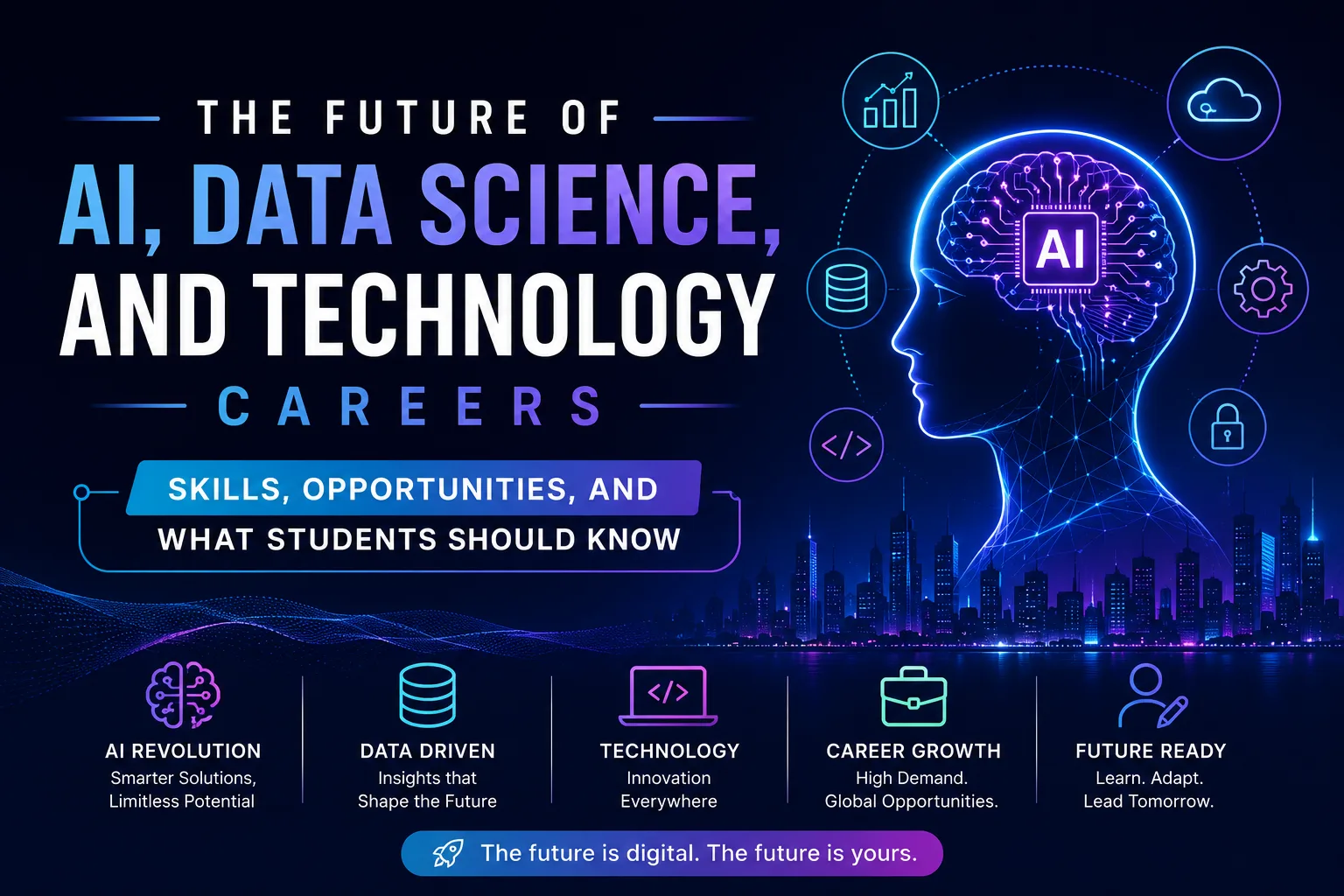
Choosing a career has never been only about finding a popular degree. Students today are preparing for a workplace that will continue to change through artificial intelligence, automation, climate action, digital services, demographic shifts, and new consumer expectations.
Some job roles may decline as repetitive tasks become automated, while completely new roles will emerge. The World Economic Forum estimates that global labour-market transformation could create 170 million roles and displace 92 million by 2030, producing a net gain of 78 million jobs. However, employers also expect a significant share of workers’ existing skills to change, making continuous learning essential.
No career can be guaranteed to grow forever. Economic conditions, regulation, technology, and local demand can change quickly. Still, several broad career areas are likely to remain important because they address long-term needs rather than short-lived trends.
Artificial Intelligence and Machine Learning
Artificial intelligence is becoming part of healthcare, finance, education, manufacturing, retail, logistics, media, and public services. This is creating demand not only for AI engineers but also for professionals who can develop, manage, test, govern, and apply AI systems responsibly.
Potential roles include:
- AI and machine-learning engineer
- Data scientist
- Natural-language processing specialist
- Computer-vision engineer
- AI product manager
- AI governance and ethics specialist
- Automation consultant
Students interested in this field should build strong foundations in mathematics, statistics, programming, data structures, and problem-solving. Knowing how to use an AI tool is useful, but understanding how models work, where they fail, and how they support business needs will provide greater long-term value.
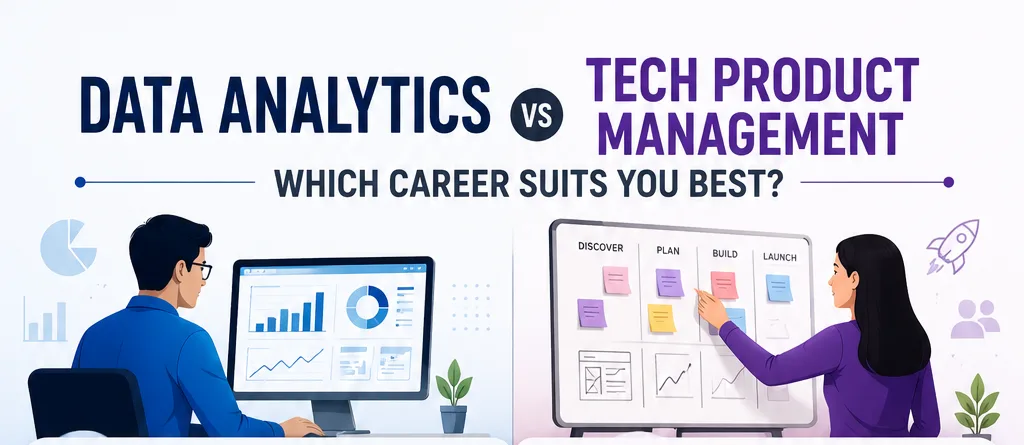
Data Science and Business Analytics
Organisations generate enormous amounts of information through websites, apps, financial transactions, machines, supply chains, and customer interactions. They need professionals who can turn that information into useful decisions.
Data-related careers include data analysis, business intelligence, risk analytics, marketing analytics, financial analytics, and data engineering. These roles are not limited to technology companies. They exist in banking, healthcare, consulting, e-commerce, sports, manufacturing, and government.
Students can prepare by learning statistics, spreadsheets, SQL, data visualisation, programming, and business communication. The ability to explain an insight clearly is often as important as finding it.
Cybersecurity
As digital systems expand, so do risks related to fraud, data theft, privacy breaches, ransomware, and infrastructure attacks. Cybersecurity is therefore becoming a basic requirement for organisations rather than an optional technology function.
Career options include:
- Security analyst
- Ethical hacker
- Cloud-security specialist
- Digital-forensics analyst
- Security architect
- Governance, risk and compliance professional
Cybersecurity suits students who enjoy logical thinking, investigation, technology, and continuous learning. Because threats evolve constantly, professionals must regularly update their technical and regulatory knowledge.
Cloud Computing and Digital Infrastructure
Businesses increasingly rely on cloud platforms to store information, run applications, support remote teams, and scale digital services. This creates opportunities in cloud engineering, platform management, DevOps, systems architecture, network administration, and reliability engineering.
These careers require more than knowledge of one software platform. Students benefit from understanding operating systems, networking, databases, automation, cybersecurity, and software deployment.
Healthcare and Allied Health Services
Healthcare demand is influenced by population growth, ageing, changing lifestyles, public-health needs, and the expansion of medical services. Career growth will not be limited to doctors.
Important fields include:
- Nursing
- Physiotherapy
- Medical laboratory technology
- Radiology and imaging
- Pharmacy
- Occupational therapy
- Public health
- Healthcare administration
- Mental-health support
- Health informatics
Healthcare careers require technical competence, empathy, communication, patience, and ethical responsibility. Students should carefully verify the recognition and professional approvals required for their chosen programme.
Renewable Energy and Sustainability
The transition towards cleaner energy is creating opportunities in solar power, wind energy, energy storage, electric mobility, sustainable construction, waste management, and environmental consulting.
The International Labour Organization identifies green and digital transitions as important sources of changing employment and skill demand. In India, official discussions have also highlighted renewable energy as a major employment area, with the country already among the world’s leading markets for renewable-energy jobs.
Potential careers include:
- Renewable-energy engineer
- Solar project specialist
- Energy auditor
- Sustainability consultant
- Environmental scientist
- Battery-technology professional
- Carbon-accounting specialist
- Electric-vehicle systems engineer
Students from engineering, science, business, policy, finance, and law can all enter different parts of the sustainability sector.
Electric Vehicles and Advanced Mobility
Electric vehicles are changing automobile design, manufacturing, charging infrastructure, energy storage, and transportation services.
Career opportunities may develop in:
- Battery engineering
- Power electronics
- Embedded systems
- Charging infrastructure
- Vehicle software
- Automotive cybersecurity
- Supply-chain management
- Mobility analytics
Students interested in this field can consider mechanical, electrical, electronics, automotive, software, or materials-related pathways. Practical exposure to testing, design tools, programming, and manufacturing processes can improve career readiness.
Robotics, Automation and Smart Manufacturing
Manufacturing is becoming more connected through sensors, robotics, artificial intelligence, digital twins, and automated production systems.
This does not mean every human role will disappear. It increases demand for people who can design, operate, maintain, integrate, and improve advanced systems.
Relevant roles include robotics engineer, automation specialist, mechatronics engineer, industrial data analyst, maintenance technologist, and manufacturing systems consultant.
Financial Technology and Risk Management
Banking and financial services are being transformed by digital payments, online lending, algorithmic analysis, cybersecurity, and automated compliance.
Growing career areas include:
- Fintech product management
- Financial analytics
- Risk management
- Fraud detection
- Regulatory technology
- Investment analysis
- Digital banking operations
Students should combine finance knowledge with data literacy, communication, regulation, and technology awareness. Traditional qualifications remain useful, but professionals who understand digital platforms may be better prepared for changing financial services.
Digital Marketing and E-Commerce
Businesses of every size now use digital platforms to reach customers, build communities, sell products, and measure campaign performance.
Career opportunities include:
- Performance marketing
- Search marketing
- Content strategy
- Brand management
- Marketing analytics
- E-commerce management
- Customer-experience design
The field is accessible to students from business, communications, technology, design, and humanities backgrounds. However, successful careers require analytical ability and business understanding, not only social-media familiarity.
Education Technology and Learning Design
Education is increasingly combining classroom instruction with digital learning platforms, interactive content, analytics, and personalised learning tools.
Potential roles include:
- Instructional designer
- Learning-experience designer
- Education technology specialist
- Academic content strategist
- Digital assessment developer
- Corporate learning professional
This field is suitable for people who understand both education and technology. Strong writing, teaching, research, design, and communication skills are valuable.
Supply Chain and Logistics
E-commerce, global sourcing, manufacturing, and rapid-delivery expectations have made supply chains more complex and data-driven.
Career paths include:
- Supply-chain analyst
- Logistics manager
- Procurement specialist
- Warehouse automation professional
- Operations planner
- Demand forecasting analyst
Students interested in this area should develop analytical thinking, operations knowledge, spreadsheet skills, communication, and an understanding of technology-enabled logistics.
Human-Centred Careers Will Remain Important
Not every growing career will be highly technical. Roles involving care, counselling, teaching, negotiation, leadership, creativity, and relationship-building may remain valuable because they depend heavily on trust and human judgement.
Technology may assist these professionals, but it is less likely to completely replace the interpersonal side of their work.
Examples include:
- Psychologists and counsellors
- Teachers and trainers
- Social workers
- Human-resource professionals
- Healthcare workers
- Legal and compliance advisers
- Customer-success professionals
Skills That Will Matter Across Careers
Students should avoid preparing for a future job market by learning only one tool. Software changes, but transferable skills remain useful.
The World Economic Forum identifies technological literacy, AI and big data, cybersecurity, creative thinking, resilience, flexibility, and lifelong learning among the capabilities becoming more important to employers.
A future-ready profile should combine:
- Subject knowledge
- Digital literacy
- Communication
- Critical thinking
- Problem-solving
- Adaptability
- Practical experience
- Ethical judgement
- Continuous learning
How Students Can Prepare
Students do not need to predict one perfect career today. A better approach is to build a strong foundation and remain open to related opportunities.
Start by researching industries rather than job titles alone. Review course curricula, internship support, industry partnerships, laboratory facilities, and placement outcomes before selecting a college.
During college, work on projects, complete internships, participate in competitions, develop communication skills, and build a portfolio that demonstrates what you can do. Certifications can support your profile, but they should be accompanied by genuine understanding and practical work.
Looking Ahead
The careers most likely to grow over the next decade will generally be connected to major long-term needs: digital transformation, healthcare, sustainability, financial security, education, advanced manufacturing, and human well-being.
Students should not select a career only because it appears on a “future jobs” list. Interest, aptitude, eligibility, financial planning, and the actual nature of the work still matter.
The strongest strategy is to choose a broad field with lasting relevance, develop practical and transferable skills, and remain willing to learn as industries evolve. The future may be uncertain, but students who combine curiosity, adaptability, and real-world experience will be better positioned to grow with it.