
The traditional MBA has long focused on subjects such as marketing, finance, human resources, operations and business strategy. These fundamentals remain important, but the business environment in which MBA graduates work is changing rapidly.
Artificial intelligence (AI), machine learning, automation and data analytics are influencing how companies make decisions, understand customers, manage employees and plan their operations. Businesses increasingly need managers who can understand these technologies and use them to solve real organisational problems.
Recognising this shift, Indian Institutes of Management (IIMs) and other leading business schools are updating their MBA programmes. Instead of limiting AI to a specialised elective, several institutions are introducing it across traditional management subjects, adding dedicated technology-focused courses and giving students more opportunities to work with practical business applications.
The objective is not to turn every MBA graduate into a software engineer. It is to prepare future managers who can work confidently with technology, interpret data, make informed decisions and understand the responsibilities that come with using AI.
Why Are MBA Programmes Changing in the AI Era?
AI is no longer limited to technology companies. Businesses across banking, retail, healthcare, consulting, manufacturing, education and other industries are exploring ways to use intelligent systems.
For example:
- Marketing: AI tools can analyse customer behaviour, support campaign planning and help businesses personalise communication.
- Finance: Predictive analytics can assist with financial forecasting, risk assessment and fraud detection.
- Human Resources: AI can support recruitment, workforce planning and employee data analysis.
- Operations: Intelligent systems can help optimise supply chains, inventory and production schedules.
- Business Strategy: Managers can use data and AI-generated insights to evaluate opportunities and make better-informed decisions.
This shift is changing employer expectations. Companies increasingly value professionals who understand both business fundamentals and emerging technologies.
As a result, B-schools are rethinking what students should learn during an MBA. The focus is expanding from understanding management theories to applying them in technology-driven business environments.
How IIMs Are Integrating AI into MBA Education
Several IIMs have introduced or expanded AI-related learning through specialised programmes, electives, curriculum updates and practical projects.
1. IIM Ahmedabad: Combining Business Analytics, AI and Management
IIM Ahmedabad has introduced a two-year Blended MBA Programme in Business Analytics and AI, designed for professionals and entrepreneurs who want to combine analytical capabilities with management and leadership skills.
The programme covers areas such as machine learning, programming for analytics, data management, generative AI applications, decision-making under uncertainty and responsible AI usage. Its curriculum also includes business-focused projects and electives related to product management, finance, human-AI collaboration and AI ethics.
The approach highlights an important development in management education: AI knowledge is becoming more valuable when students can connect it with business decisions and organisational challenges.
2. IIM Indore: Introducing AI and Machine Learning Electives
IIM Indore has been expanding its AI and analytics-related learning opportunities across postgraduate management programmes.
Its curriculum additions include subjects such as Artificial Intelligence and Machine Learning for Business, Introduction to Generative AI and Natural Language Processing, and Generative AI Applications in Marketing and Business.
For the 2026–27 academic session, the institute also announced further AI and machine learning-focused electives, including Machine Learning with Business Applications and a course examining ethics, accountability and the role of human managers in working with AI.
These developments reflect the growing importance of combining technical understanding with responsible managerial decision-making.
3. IIM Bangalore: Adapting Management Learning to Digital Business
IIM Bangalore has been updating its management education to address emerging business and technology trends.
Alongside its focus on digital learning and contemporary management subjects, the institute has explored areas such as digital economies and technology-driven business models. Its curriculum developments also reflect the growing relevance of sustainability, digital transformation and changing industry requirements.
The broader direction is to help students understand how technology influences business models, competitive strategies and leadership decisions.
4. IIM Ranchi: Bringing AI into Everyday MBA Learning
IIM Ranchi has introduced a curriculum-wide approach called Working with AI (WAI).
Rather than treating AI as a separate topic, this initiative integrates its practical use into different MBA courses. Students work with AI to address management challenges involving marketing, finance, strategy, operations, human resources and analytics.
The approach also emphasises critical thinking, professional judgement and responsible technology use. It demonstrates how AI can become part of everyday management learning rather than remaining limited to classroom theory.
How Other Top B-Schools Are Updating Their MBA Curricula
The shift towards AI-oriented management education is not restricted to IIMs. Private business schools and universities are also introducing new courses and integrating AI into existing specialisations.
Jaipuria School of Business
Jaipuria School of Business has introduced a 30-hour first-year course on emerging technologies and AI for business leaders. Its Business Analytics specialisation also incorporates AI-related learning.
The focus is on helping management students understand emerging technologies and their relevance to business leadership.
Great Lakes Institute of Management
Great Lakes Institute of Management has been following an approach that integrates AI across management disciplines instead of restricting it to one specialised subject.
This allows students to explore the role of AI in different business functions and understand how technology can support managerial decisions.
BML Munjal University
BML Munjal University is also incorporating AI into management learning, with attention to practical business applications such as strategy, marketing planning, financial forecasting and operational optimisation.
These developments indicate that AI awareness and application are becoming increasingly relevant across different types of management programmes.
What New Skills Will MBA Students Need in the AI Era?
As MBA curricula evolve, students will need a broader combination of management, analytical and technology-related skills.
Some of the most valuable areas include:
1. AI Literacy
Students should understand how AI systems work at a practical level, what they can do and where their limitations lie. Knowing how to use AI tools effectively will become an important professional capability.
2. Data Analysis and Interpretation
Businesses generate large amounts of data. Future managers must be able to interpret information, identify patterns and use evidence to support business decisions.
3. Generative AI and Prompting
Generative AI tools can support research, content development, summarisation, brainstorming and business analysis. MBA students should learn how to use these tools effectively while checking the accuracy and relevance of their outputs.
4. Critical Thinking and Problem-Solving
AI can generate recommendations, but managers must evaluate whether those recommendations make sense in a real business situation. Critical thinking will remain essential when dealing with uncertainty, conflicting information and complex decisions.
5. Ethical and Responsible AI Usage
AI systems can create concerns involving data privacy, bias, transparency, security and accountability. Future managers must understand these risks before introducing AI into business processes.
6. Communication and Leadership
Technology alone cannot manage people or build organisational trust. Managers will continue to need communication, teamwork, negotiation and leadership skills to guide teams through technological change.
Will an MBA in AI or Business Analytics Be Better Than a Traditional MBA?
Not necessarily. The right choice depends on a student's interests, career goals and preferred industry.
A specialised MBA in Business Analytics or AI may suit students interested in data-driven decision-making, analytics consulting, digital transformation and technology-focused business roles.
A general MBA may be more suitable for students who want broader exposure to marketing, finance, human resources, operations, strategy or general management.
However, the distinction is becoming less rigid. Even traditional MBA programmes are increasingly incorporating AI and analytics into their curriculum.
Before selecting a programme, students should examine:
- Whether AI and analytics are part of the core curriculum or only optional electives.
- Whether students receive practical exposure through projects, simulations or industry assignments.
- Whether the programme teaches responsible AI usage and data ethics.
- Whether faculty members have relevant academic or industry experience.
- Whether the course structure matches the student's intended career path.
A programme should not be selected simply because its name includes the words AI, technology or analytics. The actual curriculum and learning opportunities matter much more.
What Should MBA Aspirants Look for When Choosing a B-School?
As management education changes, MBA aspirants should evaluate institutions beyond rankings, placement advertisements and infrastructure.
Curriculum relevance: Check whether the syllabus includes contemporary subjects such as AI, business analytics, digital transformation and technology-driven strategy.
Practical learning: Look for live projects, internships, case studies, business simulations and opportunities to work on real organisational problems.
Industry connections: Industry interaction can help students understand how companies are adopting technology and what skills employers expect.
Faculty expertise: Experienced faculty members who understand both management principles and emerging business developments can provide more relevant learning.
Placement quality: Review placement reports, job roles, recruiter profiles and salary information. Pay attention to the types of opportunities available rather than relying only on the highest salary figure.
Specialisation options: Understand whether the institute offers relevant electives or specialisations in analytics, finance, marketing, technology management or other areas connected to your career interests.
Will AI Replace MBA Graduates?
AI is likely to automate or simplify certain tasks traditionally performed by management professionals. These may include preparing reports, analysing datasets, summarising research, creating presentations and supporting routine decision-making.
However, management roles involve more than processing information. They require people to understand organisational priorities, manage teams, negotiate with stakeholders, handle uncertainty and take responsibility for important decisions.
The future is therefore more likely to involve collaboration between managers and AI systems than the complete replacement of management professionals.
MBA graduates who understand how to use AI effectively while developing strong leadership, communication and problem-solving abilities may be better prepared for changing workplace expectations.
Final Thoughts
AI is changing the expectations placed on business schools and MBA graduates. India's leading management institutions are responding by introducing specialised AI programmes, updating traditional subjects and providing students with opportunities to apply technology to practical business challenges.
For future MBA students, this transformation creates new learning opportunities but also makes programme selection more important. A strong MBA education should combine management fundamentals, analytical thinking, technology awareness, ethical judgement and practical experience.
The most valuable MBA graduate of the future will not simply be someone who knows how to use AI tools. It will be someone who understands when to use them, how to evaluate their outputs and how to turn technology-driven insights into responsible business decisions.
Related Articles
Continue reading with handpicked posts from our blog.
Course Guidance
List of Free Online Platforms for JEE Preparation
Preparing for JEE does not always require expensive coaching. Several free online platforms offer video lectures, practice questio...
 Course Guidance
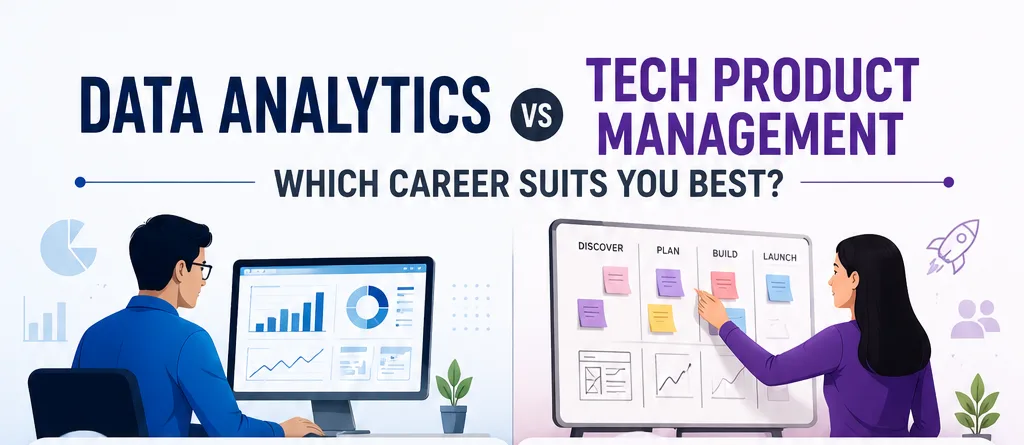
Data Analytics vs Tech Product Management: Which Career Suits You Best?
Data analytics and technical product management are both promising technology careers, but they involve different strengths and re...
 Course Guidance
Careers That Will Continue to Grow Over the Next Decade
The world of work is changing through technology, sustainability, demographic shifts, and new business models. Explore career fiel...