College is more than attending lectures and passing exams. It is a phase where students build knowledge, develop professional skills, form meaningful relationships, and prepare for life after graduation. While intelligence and talent certainly play a role, they are rarely the only reasons behind long-term success.
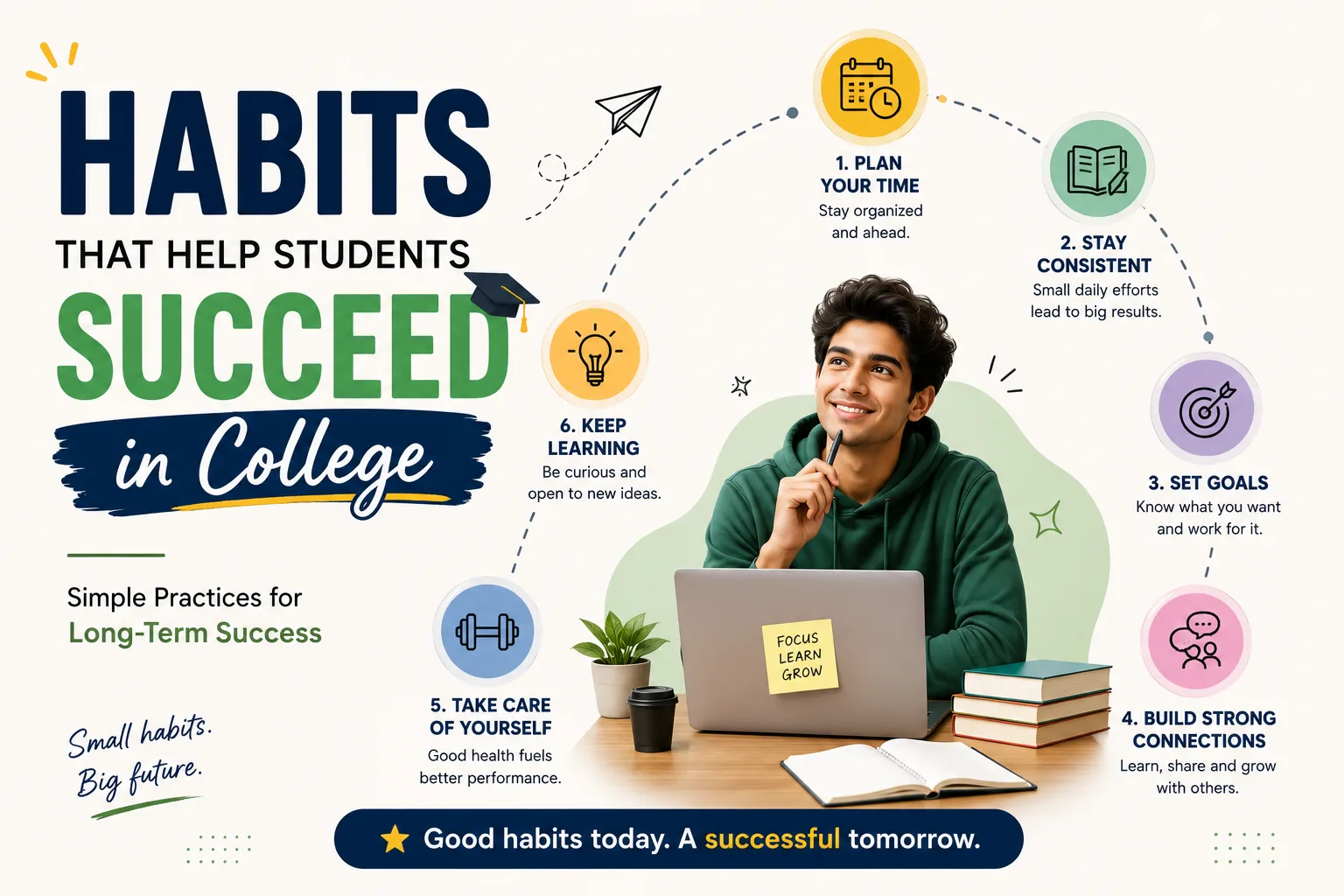
What truly sets successful students apart is their daily habits. The small choices made every day—whether it's managing time wisely, staying curious, participating in activities, or continuously learning—often have a greater impact than occasional bursts of effort.
The good news is that successful habits can be developed by anyone. With consistency and discipline, students can improve not only their academic performance but also their confidence, employability, and personal growth.
Here are some of the most effective habits that contribute to success in college.
Set Clear Academic and Career Goals
Students who have clear goals often stay more focused and motivated throughout their college journey.
Instead of simply aiming to complete assignments or pass examinations, define what you want to achieve over the next semester or the next few years.
Your goals could include:
- Maintaining a target academic score
- Completing internships
- Learning a new technical skill
- Building a professional portfolio
- Preparing for competitive examinations
- Pursuing higher education
Having direction makes it easier to prioritise your time and efforts.
Follow a Consistent Study Routine
Studying only before examinations often leads to unnecessary stress and weaker understanding of concepts.
Successful students usually follow a consistent study schedule by reviewing lecture notes regularly, completing assignments on time, and revising topics in manageable portions.
Regular learning helps improve long-term retention and reduces last-minute pressure.
Manage Time Effectively
Time is one of the most valuable resources during college.
Balancing classes, assignments, projects, internships, extracurricular activities, and personal life requires planning.
Simple habits that improve time management include:
- Creating weekly study plans
- Prioritising important tasks
- Breaking large projects into smaller goals
- Setting realistic deadlines
- Limiting unnecessary distractions
Effective time management allows students to stay productive without feeling overwhelmed.
Attend Classes Regularly
Classroom sessions provide more than just academic information.
Regular attendance helps students:
- Understand concepts more clearly
- Interact with faculty
- Participate in discussions
- Clarify doubts immediately
- Stay updated with coursework
Missing classes frequently can make it difficult to keep pace with the curriculum.
Ask Questions and Stay Curious
Curiosity is one of the strongest drivers of learning.
Students who actively ask questions, seek clarification, and explore topics beyond the syllabus often develop a deeper understanding of their subjects.
Learning shouldn't stop when the lecture ends. Reading additional resources, watching educational content, and participating in discussions can broaden your perspective.
Build Strong Communication Skills
Communication plays an important role in both academic and professional success.
Students should work on:
- Speaking confidently
- Writing clearly
- Active listening
- Presentation skills
- Professional email communication
Strong communication improves teamwork, classroom participation, internships, and placement interviews.
Participate in College Activities
Education extends beyond textbooks.
Joining student clubs, technical societies, cultural events, sports teams, or volunteer initiatives helps students develop valuable life skills such as leadership, teamwork, organisation, and confidence.
These experiences also make resumes more attractive to employers.
Gain Practical Experience Early
One of the best habits students can develop is seeking practical exposure throughout college.
Opportunities include:
- Internships
- Live projects
- Freelance work
- Research projects
- Industry workshops
- Hackathons
- Competitions
Practical experience strengthens classroom learning and helps students understand real-world applications.
Develop Reading and Learning Habits
Successful students continuously expand their knowledge beyond academic textbooks.
Reading books, industry articles, research papers, and trusted news sources improves:
- General awareness
- Critical thinking
- Vocabulary
- Problem-solving ability
- Industry knowledge
A habit of continuous learning prepares students for changing career demands.
Learn Digital and Technical Skills
Technology has become an essential part of almost every profession.
Students should regularly improve skills such as:
- Spreadsheet management
- Presentation software
- Data analysis
- Programming (where relevant)
- Digital collaboration tools
- AI-powered productivity tools
Building technical proficiency during college increases employability after graduation.
Network with Faculty, Alumni, and Professionals
Networking is often underestimated by students.
Building genuine relationships with professors, alumni, industry experts, and peers can create opportunities for mentorship, internships, projects, and career guidance.
Professional networking also helps students stay informed about industry trends and career opportunities.
Take Care of Physical and Mental Well-Being
Academic success is difficult to achieve without maintaining good health.
Healthy habits include:
- Getting adequate sleep
- Eating balanced meals
- Exercising regularly
- Taking breaks during study sessions
- Managing stress effectively
Students who maintain a healthy routine often perform better academically and remain more productive.
Accept Feedback Positively
Constructive feedback is an opportunity for improvement.
Whether it comes from professors, mentors, classmates, or internship supervisors, learning to accept suggestions with an open mind helps students grow both personally and professionally.
Successful students focus on improving rather than avoiding criticism.
Build Financial Responsibility
College is a good time to develop smart financial habits.
Students can start by:
- Creating a monthly budget
- Tracking expenses
- Saving whenever possible
- Understanding education-related costs
- Avoiding unnecessary spending
Financial awareness becomes increasingly valuable after graduation.
Stay Consistent Instead of Seeking Perfection
Many students wait for the "perfect" time to start studying, exercising, or learning new skills.
In reality, consistent effort usually produces better results than occasional periods of intense work.
Small improvements made every day accumulate into significant achievements over time.
Common Habits That Hold Students Back
Just as positive habits contribute to success, certain behaviours can limit growth.
Some common habits to avoid include:
- Procrastinating on assignments
- Skipping classes frequently
- Depending entirely on last-minute preparation
- Ignoring practical learning opportunities
- Spending excessive time on distractions
- Avoiding communication and networking
- Resisting feedback and improvement
Recognising these habits early allows students to replace them with more productive routines.
Creating Your Own Success Routine
Every student's journey is unique, but a simple daily routine can make a significant difference.
Consider including:
- Reviewing lecture notes
- Completing planned study sessions
- Reading for personal development
- Practising a technical skill
- Exercising or staying active
- Connecting with classmates or mentors
- Reflecting on daily progress
A balanced routine supports both academic achievement and personal growth.
Final Thoughts
Success in college isn't determined by luck or natural talent alone. It is built through consistent habits that improve learning, discipline, confidence, and career readiness. Students who manage their time wisely, stay curious, seek practical experience, develop communication skills, and prioritise their well-being often gain advantages that extend far beyond graduation.
Remember that meaningful progress doesn't come from making one big change—it comes from making better choices every day. By adopting positive habits early in your college journey, you can make the most of your education and prepare yourself for long-term academic, professional, and personal success.